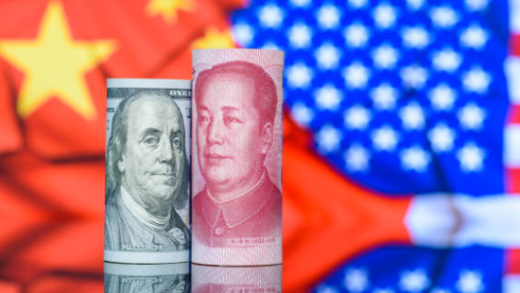
Pakistan has always punched above its weight—not in economics, governance, or human development, but in the global sport of geopolitical scapegoating. And in this long Olympic tradition, Imran Khan has become the gold-medal contender, the rare political leader blamed simultaneously by the United States, China, the Pakistani military, the opposition, and occasionally the weather.
For Washington, he was the guy who went to Moscow on the eve of a global crisis.
For Beijing, he was the guy who dared ask where all the CPEC money actually went.
For Rawalpindi, he was the guy who mistook popularity for independence.
Pakistan may not have stable institutions, but it has a remarkably stable ecosystem of blame.
America’s Favorite Frenemy
For the United States, Pakistan has always been that unreliable colleague you keep inviting to meetings because they once helped you move a couch in 1980. Washington wants Pakistan “stable,” which roughly translates to “not collapsing while Afghanistan is still in therapy.”
When Imran Khan alleged the U.S. engineered his ouster, American diplomats responded with the international equivalent of an eye-roll. But Washington’s discomfort was telling: U.S. officials don’t like being accused of interfering in Pakistan—especially when they haven’t even gotten around to it yet.
From the U.S. perspective, Imran was inconvenient.
He questioned drone strikes.
He resisted U.S. pressure on Russia.
He wasn’t reliably anti-China.
He wasn’t reliably pro-China either.
He was, in short, unreliable—something Washington tolerates only from itself.
China’s Silent Disappointment
China’s Belt and Road Initiative is many things—ambitious, strategic, occasionally delusional—but it is not charitable. Beijing prefers partners who follow instructions without asking where the electricity is, why the debt is ballooning, or why the ports look suspiciously like military bases.
Imran Khan did something unthinkable: he requested transparency.
This made him deeply suspicious to Beijing, where transparency is regarded as an exotic Western conspiracy. And as Pakistan’s economy spiraled, China became increasingly impatient with Khan’s inability to convert CPEC from a metaphorical game-changer into an actual functioning economy.
To Beijing, the military–civilian tango in Pakistan is not a democratic problem; it’s a logistical one. Deals get delayed. Projects stall. Money disappears into the dimension where South Asian infrastructure budgets go to die.
The Establishment: Pakistan’s Only Permanent Political Party
While the U.S. and China view Pakistan as a geopolitical pawn, the Pakistani military views it as real estate—strategically located, poorly managed, but eternally theirs.
Imran Khan’s actual sin was not incompetence (which is normal) or populism (which is expected).
It was forgetting who signs the permission slip for political survival.
He tried to conduct foreign policy solo, criticized senior officers, and behaved as though electoral legitimacy outranked institutional ownership. In Pakistan, this is like bringing a knife to a tank fight.
His subsequent imprisonment, gag orders, and the miraculous victory of candidates running without a party symbol are reminders of how Pakistan’s political physics work:
popularity is powerful, but gravity always wins—and gravity wears a uniform.
Geopolitical Victimhood as National Identity
Pakistan is caught between America’s declining patience, China’s rising ambitions, and its own talent for national self-sabotage. Imran Khan, willingly or not, became the symbolic casualty of this triangular tug-of-war.
- To the U.S., he was a leader who refused to take sides on Ukraine and flirted too comfortably with Moscow.
- To China, he was a leader who complicated their infrastructure dreams by demanding accountability.
- To Pakistan’s establishment, he was a leader who forgot that prime ministers are rented, not owned.
In a global order where great powers prefer compliant partners, Imran Khan’s crime was excessive improvisation.
Policy Realities
Underneath the political theatre, Pakistan faces gravely serious strategic dilemmas:
1. Strategic Dependency on the U.S.
For all the anti-American rhetoric, Pakistan’s military relies on U.S. training, equipment, diplomatic cover, and IMF influence. Any leader—even a populist—must navigate this dependency carefully. Imran did not.
2. Economic Captivity to China
CPEC loans make Beijing Pakistan’s largest creditor. Without economic reform, Pakistan risks becoming a geopolitically important—but economically insolvent—buffer state. Beijing wants returns, not revolutions.
3. Institutional Fragility
No foreign power needs to destabilize Pakistan. Domestic political engineering does the job just fine.
Until the military exits politics, every civilian leader—Khan included—is replaceable hardware in a system that refuses to upgrade its software.
4. A Citizenry That Won’t Play Along
Imran Khan’s true power isn’t geopolitics— but it’s people.
Millions believe he was wronged, and no amount of judicial acrobatics or media blackouts has erased that. If anything, martyrdom has been terrific for his approval ratings.
The Scapegoat Nobody Can Get Rid Of
Imran Khan may never return to office, but he has already returned to relevance.
For Washington, he is a cautionary tale.
For Beijing, a complication.
For Pakistan’s establishment, a haunting reminder that popularity cannot be jailed forever.
And for Pakistan itself?
He is both symptom and diagnosis: evidence that the country desperately wants political change, but remains trapped in a geopolitical boxing ring where it is always someone else’s fight.
In the end, Imran Khan is not the villain of Pakistan’s story.
He is the country’s most articulate victim.
A victim of power games he could not control, alliances he could not manage, and institutions he could not tame.
But most of all,
a victim of the simple, stubborn belief that in Pakistan, democracy should actually mean something.