
For nearly two decades, the India–European Union trade talks have drifted like a ship visible on the horizon—always present, always discussed, never truly docking. Diplomats shook hands, working groups met, communiqués promised “renewed momentum,” and then the world moved on. But if the present moment marks the true arrival of what some are calling the mother of all deals—a serious India–EU trade and defence cooperation compact—it deserves to be read not as another press release disguised as history, but as a turning point in how power now travels in the world: not only through weapons or votes, but through supply chains, standards, and the quiet force of economic choice.
Because this is not simply about tariffs. It is about the architecture of the coming decade.
The global economy is no longer the frictionless highway it pretended to be in the early 2000s. It is a guarded coastline, where every major actor now looks at trade with the same suspicion once reserved for military alliances. After the pandemic cracked open the myth of “just-in-time” globalisation, and wars returned to Europe and the Middle East with a vengeance, commerce stopped being a neutral act. Containers began to carry politics. Chips began to carry strategy. Even fertiliser and medicines began to carry leverage. In that world, India and Europe do not have the luxury of treating each other as optional.
They are, in a new sense, necessary.
Europe, for all its wealth and regulatory power, has spent the last decade learning an uncomfortable lesson: dependence is not efficiency, it is vulnerability. Energy dependence turned into a strategic trap. Supply dependence turned into an economic risk. And the past few years have made it painfully clear that Europe cannot outsource resilience to someone else’s stability. It needs partners that do not merely sell products, but share the burden of keeping the global system functional—partners that can absorb investment, build at scale, and still keep strategic independence intact.
India, for its part, has spent the last decade discovering that market size is not destiny. A billion consumers are impressive, but without deep manufacturing ecosystems, predictable export lanes, and high-trust access to advanced markets, growth can remain domestically loud yet internationally under-leveraged. India does not need another ribbon-cutting moment. It needs the kind of economic binding that changes incentives for businesses to place long-term bets—factories, research centres, design hubs, defence manufacturing ecosystems, and supply chains that don’t collapse the moment the world catches a fever.
That is why the India–EU convergence, after so many false dawns, suddenly looks real.
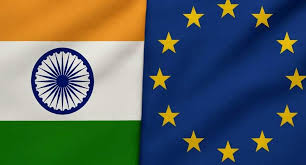
The obvious question is why it took so long. The simple answer—that trade agreements are complex—does not do justice to the deeper truth: these talks stalled because they were always about more than trade. They were about identity. Europe negotiates with the confidence of a bloc built on rules. India negotiates with the caution of a democracy built on livelihoods. The EU often speaks the language of standards, enforcement, and predictability. India speaks the language of policy space, social stability, and gradual transition. To Europe, a deal is credibility. To India, a deal can become domestic disruption if it arrives too fast, too wide, and too indifferent to the social map of work and small enterprise.
And then came the extra weight of the twenty-first century: climate, data, geopolitics, and national security. A deal that might once have been a classic bargain over cars and tariffs became a referendum on carbon border adjustments, digital sovereignty, migration sensitivities, and the uncomfortable proximity of trade with strategic alignment. In short, it became the kind of negotiation where every compromise creates winners and losers not only across borders, but within cabinets.
Which brings us to the real reason the deal is coming alive now: the world has changed so completely that delay has become costlier than disagreement.
The United States—still the centre of financial gravity and military power—has also become more transactional and politically volatile in trade behaviour. China—still unmatched in manufacturing scale—has become, for many capitals, a risk to be managed rather than a partner to trust. Russia—once treated as a permanent energy pillar of Europe and a defence pillar for India—has become a strategic complication in both directions. Meanwhile, the global commons of shipping routes, undersea cables, and critical minerals supply is no longer assumed to be secure. It must now be secured.
So when India and Europe move closer, it is not romance. It is realism.
Yet the full significance of an India–EU compact is not merely bilateral. Its shockwaves travel outward, and that is where its true geopolitical weight lies. For the first time in a generation, the world may witness the emergence of a large-scale economic axis that is neither American-led nor China-centred. Not an alliance in the old military sense, and not an ideological bloc in the Cold War sense, but something subtler: a third pillar of economic order—built on Europe’s regulatory influence and India’s demographic and production potential, reinforced by strategic and defence cooperation that signals seriousness.
This matters because in the modern world, the most decisive power is not always the power to punish. It is the power to redirect.
When Europe shifts procurement, investment, and supply-chain planning, global industry listens. When India offers scale, talent, and demand, global capital moves. When these two forces align, a new gravity well forms. A gravity well does not conquer; it attracts. It changes choices. It alters business models. It tells manufacturers, investors, and innovators that there is now a dependable route between a massive production base and one of the world’s most demanding consumer markets. That is how trade corridors become geopolitical corridors.
And once corridors harden, they reshape the map.
The biggest strategic loser in such a shift is not a country that loses a few percentage points of exports. It is a country that loses centrality. China’s dominance was never only about cheap goods. It was about being the default answer to every boardroom question: Where do we source? Where do we assemble? Where do we scale? De-risking is not decoupling—but it is a slow, deliberate migration of certainty away from a single centre. If India becomes Europe’s preferred diversification anchor, China does not collapse. But it begins, gradually, to share a throne it once occupied almost alone.
Russia, too, watches carefully. For decades, defence cooperation with India was as much about habit as strategy—deep inventory dependence, trusted platforms, and long-established procurement pathways. If Europe and India deepen defence collaboration, co-development, and maritime security understanding, it does not mean India breaks with Russia. India rarely breaks; it balances. But it does mean that Russia’s monopoly leverage fades. And in geopolitics, fading monopolies matter more than dramatic breakups.
The United States, on the other hand, experiences a more complicated impact. Strategically, Washington has long wanted its partners to carry more weight in maintaining a stable Indo-Pacific order. A stronger India that is more economically integrated with Europe can be seen as a net gain for the “free world’s” resilience. But economically, America may find that European firms gain new advantages in Indian markets, and that EU-India cooperation on standards, clean-tech rules, or digital governance could produce a model that competes with American preferences. In other words: the United States may applaud the geopolitical direction, while quietly measuring the commercial costs.
All of this leads to the most important truth: the India–EU deal is not about making the world more open. It is about making the world more organised around trust.
That is why the language of “trade” is too small for what is happening. Modern trade agreements are no longer contracts for goods. They are templates for the future. They decide which standards travel globally. They decide whose regulations become international defaults. They decide which countries get to supply the next generation of batteries, semiconductors, medicines, green hydrogen, aerospace components, and the defence-industrial base that underwrites sovereignty.
And there is an irony here. Europe, often criticised for over-regulating, may find in India a partner that can take European standards and scale them through mass production in a way Europe itself cannot. India, often criticised for protecting domestic industry, may find in Europe the exact kind of high-value market access that forces Indian industry to upgrade—from cost competitiveness to quality competitiveness, from volume to value. If managed well, this is not just a handshake. It is a transformation engine.
But there is also risk—especially for India.
Every large trade compact creates internal political losers. The most visible pressure falls on those industries that have survived behind tariffs and inertia. MSMEs that operate on thin margins could feel the arrival of European competition as a shock, not an opportunity. Certain segments of domestic manufacturing may discover that competitiveness is not a slogan but a painful discipline. And agriculture—always politically sensitive in India—can become the emotional battleground even when the technical terms are carefully designed. Trade deals fail in the streets, not in conference rooms.
That is why the true test of this “mother of all deals” will not be the signing ceremony. It will be what India builds in response: ports that move faster, logistics that cost less, skilling systems that match high-end manufacturing, regulatory certainty that keeps investors confident, and industrial policy that upgrades competitiveness rather than merely protecting weakness.
If India treats this moment as a trophy, the benefits will be short-lived and uneven. If India treats it as a discipline, it could change the country’s growth trajectory.
Because what this deal offers India is not just European market access. It offers India a path to becoming something the world has not yet fully accepted it as: a manufacturing and strategic-industrial power at scale. A country not only of engineers, but of industrial ecosystems. Not only of software exports, but of physical value chains. Not only of strategic autonomy in speeches, but of strategic autonomy supported by production capacity.
For Europe, the deal offers something equally valuable: a partner that strengthens Europe’s ability to stand upright in a multipolar world without becoming a satellite of any one superpower. A partner that can absorb investment and share supply-chain burdens. A partner that sits at the crossroads of the Indo-Pacific, where maritime security is no longer optional for prosperity.
Seen this way, the India–EU compact is not merely an agreement. It is an acknowledgement that the age of naïve globalisation is over, and the age of strategic interdependence has begun.
In the end, the deal’s greatest impact may be psychological. It tells the world that India is no longer negotiating for entry into someone else’s system—it is negotiating to shape the system. It tells Europe that its influence will not survive by nostalgia alone; it must be renewed through real partnerships. And it tells every major player—from Washington to Beijing—that the future will belong not only to those who can project power, but to those who can design resilient networks of trade, technology, and security.
The modern world does not collapse in dramatic wars alone. It collapses quietly, through broken supply chains, weaponised dependencies, and the erosion of trust. In that context, an India–EU deal is not merely commerce. It is an attempt—ambitious, imperfect, but necessary—to rebuild trust as a system.
And that, more than any tariff line or defence clause, is why readers may one day look back on this moment and recognise it as the week the world began to trade differently.