
By: Emdi Iyer
The modern world does not suffer from a lack of information. It suffers from a lack of understanding.
News breaks instantly, opinions multiply rapidly, and narratives harden long before evidence has time to settle. From economic policy and global trade to careers, technology, and education, complexity has grown — yet explanations have become thinner, faster, and more emotionally charged.
The result is a widening gap between what is happening and how people experience it.
It is within this gap that platforms such as https://explainitclearly.blogspot.com have begun positioning themselves — not as competitors to breaking news, but as interpreters of change.
When Speed Crowds Out Sense
The digital information economy rewards velocity. Headlines are compressed, nuance is trimmed, and certainty is favoured over accuracy. Algorithms amplify outrage more efficiently than insight.
This dynamic shapes how major issues are perceived:
- Economic reforms framed as instant success or failure
- Technology shifts sold as universal opportunity or total threat
- Career advice reduced to trends rather than trajectories
Lost in this noise is the lived reality of individuals trying to adapt — emotionally, professionally, and financially — to forces largely beyond their control.
The Missing Emotional Context
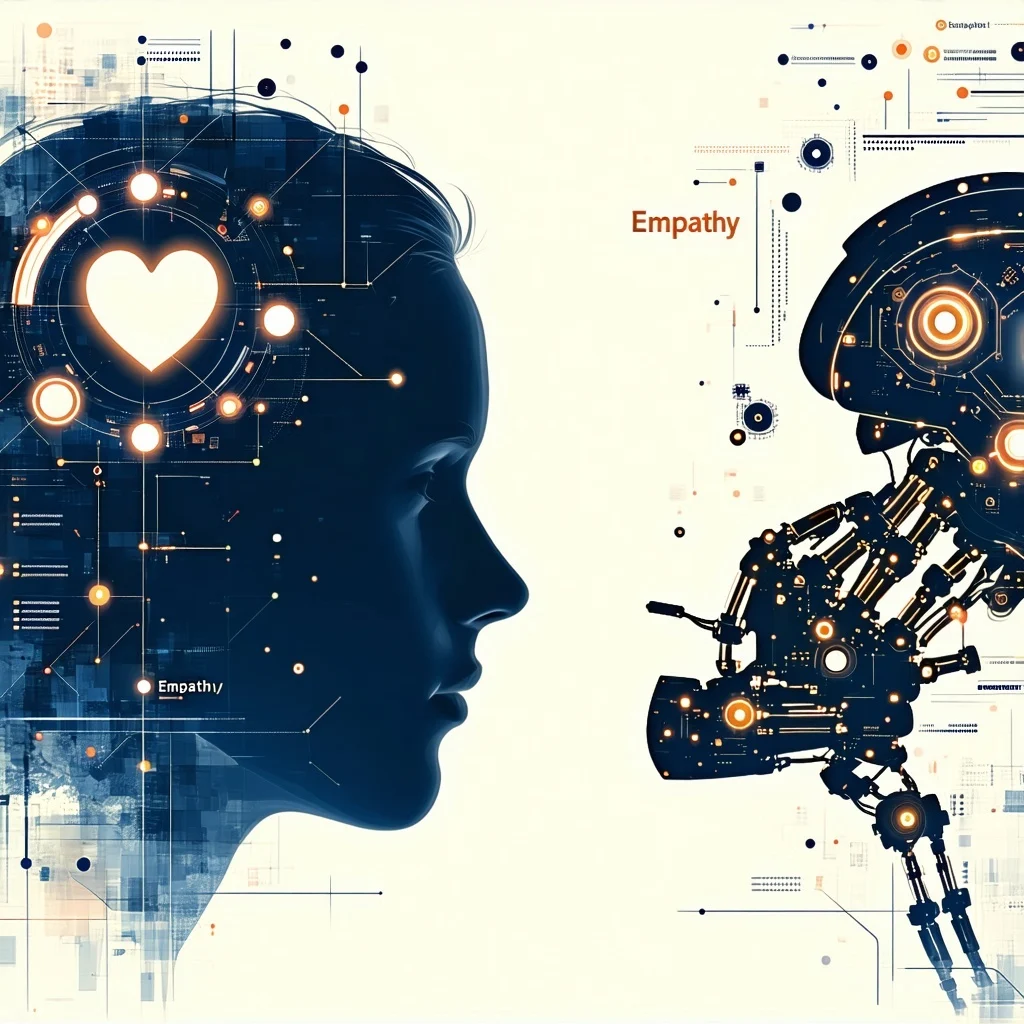
One of the most overlooked gaps in public discourse is the emotional dimension of change.
Reskilling, job displacement, career transitions, and technological disruption are often discussed in technical terms — skills, salaries, productivity. Far less attention is paid to uncertainty, anxiety, identity loss, and decision fatigue.
Platforms like explainitclearly.blogspot.com have begun addressing this blind spot through a dedicated emotional and human-impact section, examining how large-scale economic and technological shifts are actually experienced by people on the ground.
This approach recognises a simple truth:
people do not make decisions in spreadsheets alone.
Understanding emotions does not weaken analysis — it strengthens it.
Reskilling in a Volatile World
Few topics illustrate the need for clarity better than reskilling.
Across countries, workers are repeatedly told to “adapt” — often without clear guidance on what that means, how long it takes, or who truly benefits. Skills are marketed as future-proof even as demand cycles shift rapidly.
Rather than treating reskilling as a slogan, explainitclearly.blogspot.com approaches it as a system-level issue, connecting:
- Education pathways
- Labour market demand
- Policy incentives
- Global mobility
- And realistic timelines
By placing reskilling within economic, demographic, and global trade contexts, the discussion moves beyond motivation — toward informed decision-making.
A Broader Explanatory Lens
Beyond emotions and reskilling, the platform spans multiple, increasingly interconnected genres:
- Global careers and cross-border opportunities
- Economic policy, trade, and manufacturing shifts
- Technology, AI, and the future of work
- Venture building without hype or glamour
- India-plus-global perspectives grounded in data and history
The unifying principle is not prediction, but perspective — helping readers see how these forces intersect rather than treating them in isolation.
Clarity Is Not Simplification
There is a persistent misconception that clarity requires reducing complexity. It does not.
Clarity requires organisation, context, and intellectual honesty.
It means presenting trade-offs alongside benefits, uncertainty alongside opportunity, and long-term consequences alongside short-term headlines. It also means acknowledging what cannot yet be known.
In a globalised world — where a policy decision in one region reshapes careers and capital flows elsewhere — this discipline is essential.
The Responsibility of Modern Journalism
Journalism has always been more than reporting events. Its deeper function has been to help societies interpret change.
Today, that responsibility is heavier. As volatility becomes the norm — economic, technological, and geopolitical — readers are not just looking for updates. They are looking for meaning.
Whether through traditional newsrooms or explanatory platforms like explainitclearly.blogspot.com, the future of credible journalism may depend less on who speaks first — and more on who explains with depth, empathy, and context.
Looking Ahead
As information continues to multiply, clarity will become increasingly scarce — and increasingly valuable.
Readers are already signalling fatigue with noise and appetite for understanding. Platforms that combine rigorous analysis with emotional awareness may not dominate the attention economy, but they are likely to shape trust over time.
In an age defined by speed, understanding has become a form of power.
And clarity — patiently built, carefully explained — may be its most enduring currency.