
India’s largest airline is facing the largest crisis in its history—and the turbulence is far from over. With hundreds of IndiGo flights cancelled, thousands of passengers stranded, airports overflowing with chaos, and regulators forced into emergency intervention, the recent meltdown reflects far more than a temporary staffing shortage or seasonal disruption. It is a systemic failure, years in the making, and a warning that India’s aviation boom has been built on operational models far more fragile than they appeared from 35,000 feet above ground.
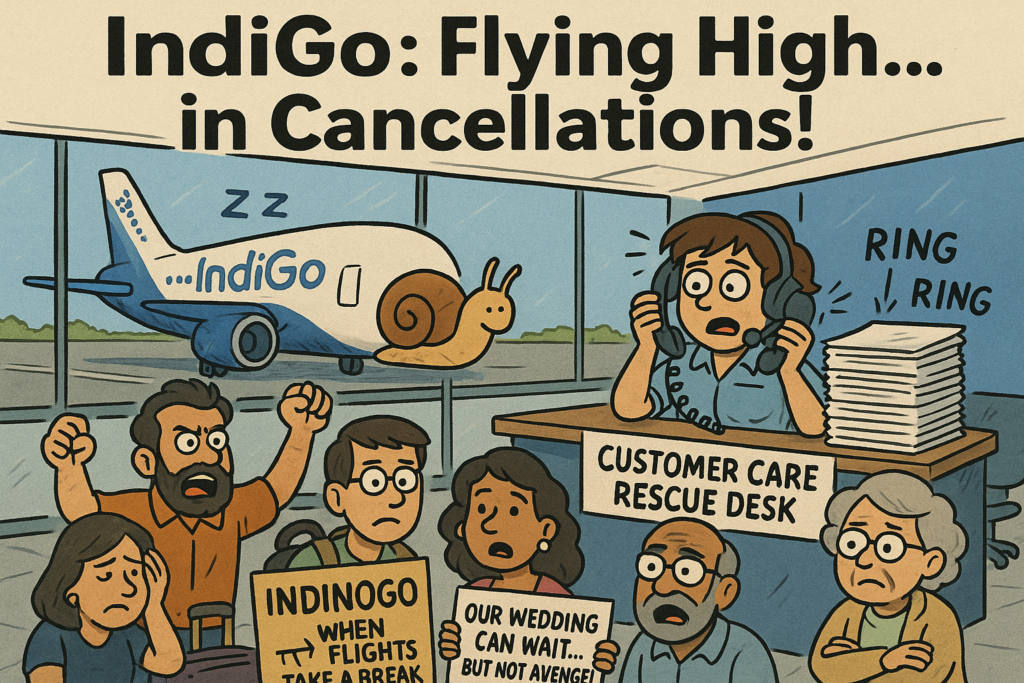
IndiGo’s brand long rested on an unchallenged reputation: reliability, affordability, and clockwork efficiency. For over a decade, travellers chose IndiGo not just for low fares but because they could trust that it would get them where they needed to go, on time. That trust has now been shaken. When an airline cancels hundreds of flights within days and cannot offer clear communication or contingency plans, the damage is not merely logistical—it is strategic and emotional.
The immediate trigger is widely known: a severe shortage of pilots and cabin crew, worsened by new flight duty-time regulations designed to combat fatigue, especially during night operations. Once these norms were enforced, IndiGo’s highly compressed scheduling model collapsed. The airline simply did not have enough rested, certified crew members to operate the flights it had planned. What followed was a domino effect—cancellations, delays, stranded passengers, soaring fares across the sector, and a ripple of panic felt from airport terminals to corporate boardrooms.
But the deeper truth is more uncomfortable: this crisis was inevitable. IndiGo has spent years pursuing an aggressive high-utilization operating model—maximum flights per aircraft, minimal turnaround time, and the thinnest possible margin for disruption. It was a strategy that delivered stunning growth and market dominance, but one built on relentless pressure on the human infrastructure that makes aviation function. Efficiency at the edge eventually breaks, and that moment has arrived.
To describe the crisis merely as a crew shortage is to sanitize the structural weaknesses it has exposed. This is a failure of foresight, planning, resilience, and humility. The world’s fastest-growing aviation market cannot be run like a factory pushing machines to their limits. Aviation demands buffers—spare pilots, spare aircraft, flexible schedules, contingency systems, and respect for safety standards. IndiGo grew faster than it evolved.
The consequences are already reshaping the industry. Railways have added coaches to absorb stranded travellers. Competing airlines are scrambling to capitalize on the opportunity. Passengers, long conditioned to believe that IndiGo equals reliability, now speak with skepticism. Regulators are stepping in, demanding answers and enforcement. And price shocks in the aviation sector have begun affecting tourism, business travel, and logistics.
What happens next may define the future of Indian aviation. Three scenarios are now visible.
The most likely scenario is controlled recovery. IndiGo may stabilize operations within 2–6 months through accelerated hiring, revised scheduling, and better crew management. Service reliability would gradually return, though fares may remain elevated. Trust will rebuild, but slowly.
A second scenario is prolonged turbulence. If pilot attrition intensifies, regulatory scrutiny escalates, or customer dissatisfaction hardens into lost loyalty, IndiGo may face a loss of market share to Air India, Vistara, and Akasa. Expansion plans may stall, investors may demand leadership changes, and the airline could slide from dominance into mediocrity.
The third scenario—the least likely but most transformative—is reinvention. IndiGo could treat this crisis as a turning point, redesigning its operational philosophy, investing in technology-driven rostering and predictive fatigue systems, strengthening training pipelines, and shifting strategy from volume to resilience. If executed intelligently, the airline could emerge stronger and more respected than before.
The decision before IndiGo’s leadership is not about managing a schedule. It is about redefining purpose. Will the airline settle for patching holes, or will it rebuild itself to withstand 21st-century aviation pressures?
India should care deeply about the answer. A fragile aviation system is not simply a business problem; it is an economic and infrastructural vulnerability. The time has come to ask whether rapid growth without safety buffers and without respect for workforce sustainability is acceptable. The future of Indian aviation must prioritize reliability, transparency, and structural strength—not expansion at any cost.
IndiGo’s crisis is a wake-up call. Whether it becomes a point of collapse or a moment of transformation will depend on choices made in the next 100 days. For now, passengers wait, regulators watch, competitors prepare—and the nation holds its breath.