For over seven decades, the global financial system has rested on a simple foundation: the dominance of the US dollar. It has served as the world’s primary reserve currency, medium of trade, store of value, and unit of account. Today, that foundation is not collapsing—but it is quietly evolving. The debate is no longer about replacing the dollar, but about reducing vulnerability to it.
This evolution reflects a deeper transformation in global financial architecture, driven less by ideology and more by geoeconomic risk management.
From Trust to Risk Mitigation
The dollar’s dominance rests on trust—in US institutions, deep capital markets, legal certainty, and geopolitical power. These fundamentals remain strong. Yet the expanding use of financial sanctions, asset freezes, and payment-system exclusions has introduced a new dimension: risk.
For many states, reserve diversification is no longer a political statement but a form of insurance against single-point exposure during geopolitical stress.
Sanctions as Geoeconomic Weapons
Sanctions have become one of the most potent tools of modern statecraft. Leveraging the centrality of the dollar and Western financial infrastructure allows sanctioning states to restrict access to reserves, capital markets, insurance, and settlement systems—often without military escalation.
The freezing of sovereign assets and pressure on third-country banks demonstrate how currency dominance translates into coercive power. Importantly, the effects extend beyond sanctioned countries. Neutral states increasingly factor geopolitical alignment into reserve management, trade settlement, and capital flow strategies.
The Unintended Costs of Financial Weaponisation
While sanctions can be effective, overuse risks eroding confidence in the neutrality of the financial system. If access to reserves and payments appears conditional on political alignment, countries will seek hedges—diversifying reserves, increasing gold holdings, and developing alternative settlement arrangements.
This does not dethrone the dollar, but it slowly chips away at its neutrality premium, encouraging a more fragmented and cautious global financial order.
The Global South: Exposure Without Influence
For the Global South, financial weaponisation poses a structural challenge. Many developing economies are not direct sanction targets, yet they suffer from tighter global liquidity, higher borrowing costs, and volatile capital flows.
Dollar appreciation and rising interest rates increase debt burdens, while fragmented financial channels raise transaction costs. For these countries, the priority is not de-dollarisation but reliable access to liquidity, orderly debt restructuring, and counter-cyclical financing.
India’s Strategic Calculus: Resilience Without Rupture
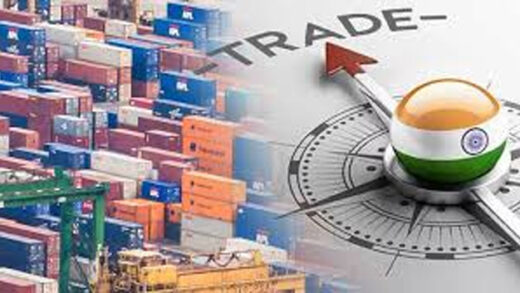
India occupies a distinctive position in this evolving financial order. As a large, open economy integrated into global capital markets, India benefits from dollar stability—which lowers borrowing costs, supports trade invoicing, and anchors investor confidence. At the same time, India cannot ignore the strategic risks of excessive reliance on any single currency or financial channel.
India’s response has therefore been deliberately incremental and non-ideological. Rather than pursuing abrupt currency internationalisation or symbolic de-dollarisation, New Delhi has focused on building resilience at the margins.
This includes selectively expanding rupee-based trade settlement with key partners, strengthening foreign exchange reserves as a buffer against external shocks, and engaging in bilateral and multilateral financial diplomacy to preserve market access during periods of stress. These steps enhance optionality without signalling disengagement from the existing system.
India’s approach also reflects its broader geopolitical posture. As a country that maintains working relationships across geopolitical blocs, India has a vested interest in financial predictability rather than fragmentation. Excessive politicisation of finance would narrow India’s strategic space, complicate energy and defence transactions, and increase vulnerability during crises.
At the institutional level, India is well placed to argue for reforms that strengthen global financial stability: expanded crisis-liquidity facilities, fairer representation for emerging economies in multilateral institutions, and more effective sovereign debt resolution mechanisms. These reforms matter more for India’s long-term security than headline-grabbing currency shifts.
Finally, India’s financial strategy aligns with its economic trajectory. Sustaining growth, attracting long-term capital, and funding infrastructure require deep engagement with global finance. Strategic autonomy, in this context, does not mean insulation—it means the ability to absorb shocks without being forced into alignment.
China–India Financial Contrast
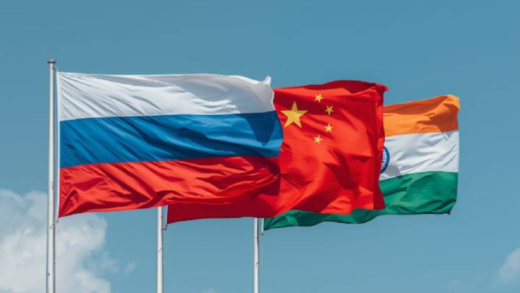
The divergence between China and India in navigating the shifting financial order is increasingly stark. China has pursued a state-driven strategy to internationalise the yuan through trade settlement mandates, bilateral swap lines, and financial linkages tied to infrastructure and lending. Yet capital controls, limited transparency, and concerns over political intervention constrain global trust in Chinese financial instruments. India, by contrast, has adopted a market-compatible, risk-averse approach—prioritising financial stability, reserve adequacy, and integration with global capital markets over rapid currency ambition. Where China seeks influence through financial scale and leverage, India seeks resilience through credibility and openness. In a world wary of financial coercion, this distinction may prove more durable than headline-grabbing alternatives to the dollar.
The Risk of Financial Fragmentation
While diversification enhances resilience, unchecked fragmentation would raise transaction costs, thin liquidity, and slow global growth—hurting emerging economies most. A world of rival financial blocs would reduce efficiency without guaranteeing security.
The challenge is to de-risk without de-globalising.
The role of reserve currencies is shifting—not through abrupt replacement, but through gradual adaptation. The dollar remains central, but its power is now explicitly geoeconomic as well as financial.
In this evolving architecture, influence will belong not to those who abandon the system, but to those who shape its rules while remaining credible participants. For India, the objective is clear: preserve stability, build resilience, and expand strategic space—without sacrificing growth or credibility.