India’s National Education Policy (NEP) 2020 promises nothing short of a paradigm shift—from rote learning to conceptual understanding, from rigid curricula to flexibility, and from exam-centric schooling to holistic development. At the heart of this ambitious transformation stands the teacher. Yet, five years after the NEP’s announcement, a pressing question remains: Are we truly preparing educators for NEP classrooms, or are we changing policies faster than we are changing pedagogy?
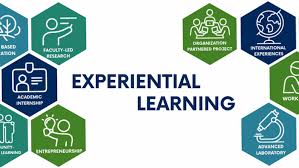
The NEP envisions teachers as facilitators, mentors, and co-learners rather than mere transmitters of textbook knowledge. Multidisciplinary learning, experiential pedagogy, competency-based assessment, digital integration, and mother-tongue instruction demand a fundamentally different skill set. However, much of India’s teacher training ecosystem—particularly pre-service programmes like B.Ed. and in-service professional development—continues to operate within traditional frameworks.
One of the NEP’s most significant reforms is the move toward holistic and multidisciplinary education. Teachers are now expected to connect concepts across subjects, encourage inquiry, and nurture creativity. Yet, teacher education remains largely siloed. A science teacher is rarely trained to integrate social or ethical dimensions into lessons, and arts teachers often lack exposure to interdisciplinary approaches. Without robust retraining, expecting teachers to deliver integrated learning is unrealistic.
Assessment reform poses another challenge. NEP calls for formative, competency-based evaluation that measures understanding rather than memorization. However, most teachers themselves were educated and trained under exam-driven systems. Workshops on assessment are often short-term and theoretical, offering little practical guidance on designing rubrics, portfolios, or project-based evaluations. As a result, many classrooms continue to rely on traditional tests, undermining the policy’s intent.
The digital transformation of education, accelerated by the pandemic, further exposes gaps in teacher preparedness. NEP promotes technology-enabled learning, blended classrooms, and digital literacy. While urban private schools may provide teachers with training and infrastructure, a vast number of educators—especially in rural and government schools—struggle with basic digital tools. Teacher training institutions rarely offer sustained, hands-on digital pedagogy modules, widening the urban–rural divide.
Language policy under NEP adds another layer of complexity. Teaching in the mother tongue or regional language at the foundational level is pedagogically sound, but it demands teachers who are proficient not just in the language, but also in translating modern pedagogical resources into it. Many teachers lack access to quality teaching-learning materials in regional languages, and training programmes have yet to adequately address this need.
Perhaps the most overlooked aspect is teacher motivation and professional autonomy. NEP emphasizes continuous professional development (CPD), but in practice, training often feels like a compliance exercise rather than meaningful growth. Teachers are rarely consulted in curriculum design or policy implementation, leading to a disconnect between reform goals and classroom realities. Without respect for teachers as intellectual professionals, training initiatives risk becoming box-ticking exercises.
This is not to say progress is absent. The introduction of the 4-year integrated teacher education programme (ITEP), national platforms like DIKSHA, and revised NCF frameworks signal positive intent. Yet, scale and quality remain concerns. A reform as transformative as NEP cannot succeed with fragmented, under-resourced, and uneven teacher preparation.
If NEP is to move beyond rhetoric, teacher training must undergo a structural overhaul. This means longer, practice-oriented training; strong mentorship models; regular classroom-based feedback; integration of technology and interdisciplinary pedagogy; and region-specific support. Above all, teachers must be treated as partners in reform, not passive recipients of directives.
The success of NEP will ultimately be judged not by policy documents, but by what happens inside classrooms. And classrooms, in turn, reflect the confidence, competence, and conviction of teachers. Unless we invest deeply in preparing educators for this new educational vision, NEP risks becoming a progressive policy trapped in traditional practice.
Manish Kumar writes on education, careers, and policy. He also runs the blog Explain It Clearly, where he breaks down complex topics for Indian students.https://explainitclearly.blogspot.com/