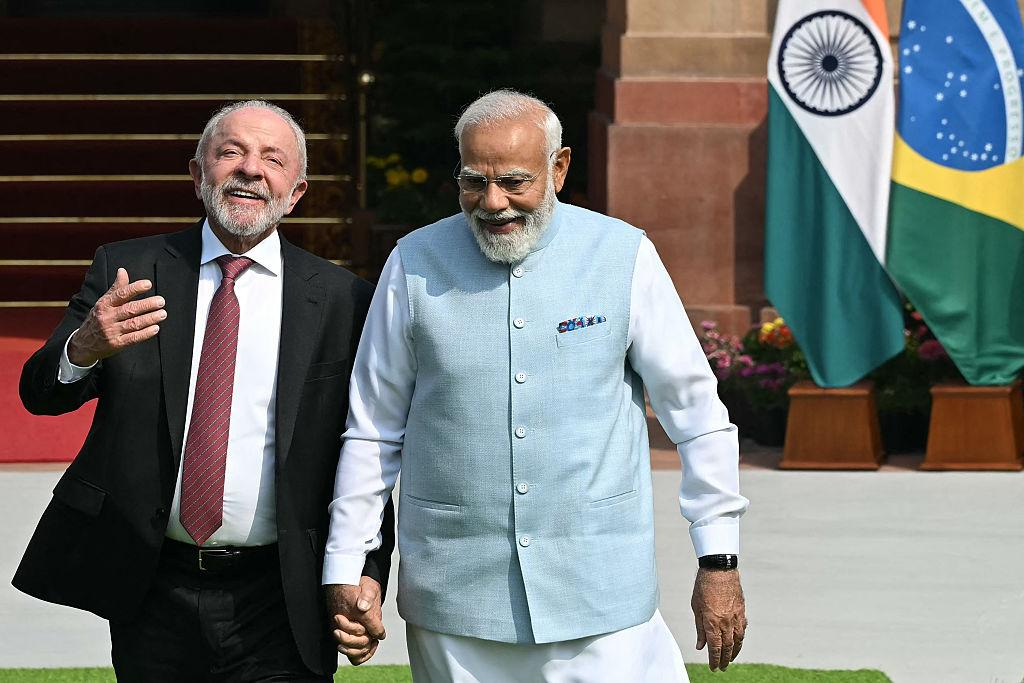
In an age of permanent crisis, diplomacy rarely makes headlines unless it carries the promise of conflict. Wars trend. Trade does not. Yet sometimes, the most consequential geopolitical shifts take place not in battlefields but in conference rooms. The recent visit of Brazil’s President, Luiz Inácio Lula da Silva, to India belongs to that quieter category — a reminder that even as the world fragments, some countries are still playing the long game.
For India, this visit signals something deeper than bilateral engagement. It reflects a strategic doctrine that is becoming increasingly visible: business as usual, even when the world is anything but.
A Pattern in India’s Foreign Policy
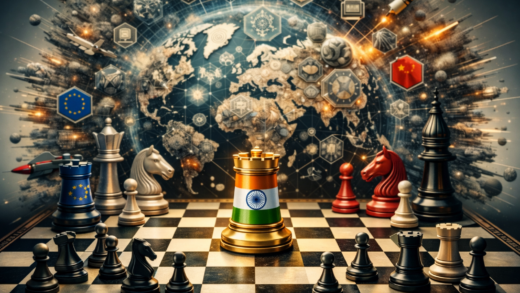
Over the past few years, India has consistently demonstrated an unusual ability to operate across fault lines. It maintains defence partnerships with the United States while importing energy from Russia. It deepens ties with Israel while expanding cooperation with the Arab world. It participates in Western-led initiatives while strengthening forums such as BRICS. The outreach to Brazil fits this pattern of strategic multi-alignment.
In a global environment shaped by the Russia–Ukraine war, Middle East tensions, and U.S.–China rivalry, India is resisting the pressure to choose camps. Instead, it is building networks.
Brazil is a natural partner in this effort. As the largest economy in Latin America and a key voice of the Global South, it brings scale, legitimacy, and diplomatic reach. The India–Brazil relationship, once peripheral, is now being repositioned as a pillar of South–South cooperation.
Trade: From Symbolism to Substance
The most immediate takeaway from the visit lies in economic intent. India and Brazil have long discussed trade expansion, but volumes remain modest compared to potential. Both countries are commodity-rich in different ways and structurally complementary.
Brazil offers:
- Agricultural strength
- Energy resources
- Critical minerals
- Food security partnerships
India offers:
- Pharmaceuticals
- Digital public infrastructure
- IT and services
- Manufacturing scale
The emphasis during the visit was on moving beyond commodity exchange toward value chains. This includes cooperation in:
- Biofuels and green energy
- Agriculture technology
- Healthcare and vaccines
- Digital governance and fintech
The biofuel partnership, in particular, has long-term strategic significance. Brazil is a global leader in ethanol, while India is rapidly expanding blending targets. Collaboration here could reshape energy security models for developing economies.
Global South Politics: The Real Agenda
While trade headlines dominate, the geopolitical subtext is clear. Both India and Brazil see an opportunity in the current global flux. As Western systems face internal stress and great-power rivalry intensifies, emerging powers are seeking greater voice.
This is where institutions matter. Within G20 and BRICS, India and Brazil share interest in:
- Reforming global financial governance
- Increasing representation in institutions such as the IMF and World Bank
- Building alternatives in development finance
- Strengthening South–South technology cooperation
The visit reaffirmed that the Global South is no longer a rhetorical category but a negotiating bloc.
Strategic Stability Through Diversification
For India, engagement with Brazil also serves a structural purpose: diversification. In a volatile world, overdependence is risk. Whether in energy, defence, supply chains, or technology, India’s strategy is to expand options.
Latin America remains an underexplored frontier in this regard. Brazil, as a gateway, provides access to markets, resources, and diplomatic networks across the region. It also strengthens India’s presence in multilateral coalitions beyond Asia.
This diversification is not ideological. It is pragmatic.
Why “Business as Usual” Is a Strategy
At first glance, routine diplomacy amid global turmoil may appear unremarkable. But this is precisely the point. India’s foreign policy today is built on continuity rather than reaction. While others are consumed by crisis management, India is investing in long-term relationships.
This approach has several advantages:
- It signals reliability in uncertain times
- It attracts partners seeking stability
- It reduces vulnerability to geopolitical shocks
- It builds economic resilience
In contrast to crisis-driven diplomacy, this is patient statecraft.
The Long-Term Effects
Over the next decade, the India–Brazil partnership could evolve in three major ways.
First, it could anchor a broader India–Latin America economic corridor. Trade, investment, and supply chain integration may expand beyond bilateral engagement.
Second, it may strengthen alternative financial and development frameworks, especially within BRICS. As global economic governance becomes contested, emerging powers will increasingly shape parallel systems.
Third, it reinforces India’s image as a bridge between worlds — North and South, East and West, developed and developing.
The Larger Message
In a fragmented world, stability itself becomes a form of power. The visit of Brazil’s president to India may not dominate headlines, but it reflects a deeper shift. The global order is no longer shaped only by military alliances. It is increasingly shaped by economic networks, technology partnerships, and strategic autonomy.
India’s message through this engagement is simple: even when the world is unstable, engagement will continue. Deals will be signed. Partnerships will grow. Options will expand.
In geopolitics, as in business, the countries that keep working while others panic often gain the most.
And that may well be India’s quiet advantage in an increasingly turbulent century.