
How a State Diagnosed Itself—and Stopped Short
In the uneasy aftermath of the 1993 Bombay Bombings, India was forced to confront not just a security failure, but a structural one. The attacks were not seen merely as acts of terror; they raised a far more disquieting possibility—that criminal networks operating within the country had evolved beyond smuggling and extortion into entities capable of intersecting with national security threats.
This was not a problem that could be addressed through routine policing. It required introspection at the level of the state itself.
The government’s response was to appoint a high-level committee under the then Union Home Secretary, N. N. Vohra. The mandate was deceptively simple: examine the linkages between organized crime syndicates and the structures of governance. In reality, the task was far more consequential. It required mapping the invisible lines connecting crime, politics, bureaucracy, and enforcement agencies—lines that had long been suspected but rarely documented.
What emerged from this exercise was the Vohra Committee Report, a document that would go on to occupy a peculiar place in India’s public discourse: frequently cited, rarely read in full, and never fully disclosed.
The portion released to the public is striking not for its length—it runs to little more than a dozen pages—but for its clarity. The report does not indulge in rhetorical excess. It does not dramatize. Instead, it presents a restrained but unmistakable conclusion: that criminal networks had developed deep and sustained linkages with politicians, public officials, and elements within the law enforcement apparatus.
It describes a system in which these networks were not operating in isolation, but in interaction with the state. In some cases, they influenced decisions. In others, they were protected from scrutiny. Over time, this interaction had enabled them to consolidate power to the extent that they began to resemble what the report cautiously terms a “parallel system.”
The phrase is understated. Its implications are not.
A parallel system is not merely a collection of criminal enterprises. It is an alternative structure of power—one that can allocate resources, enforce outcomes, and shape incentives. When such a system coexists with formal governance, the distinction between legality and illegality becomes less about rules and more about relationships.
What makes the report particularly significant is that it does not present this as an emerging threat alone. It suggests continuity. The problem was not new; it had been evolving over time, facilitated by gaps in coordination among agencies and, perhaps more critically, by a lack of decisive institutional response.
Intelligence agencies, the report notes, possessed fragments of information. Law enforcement bodies had encountered elements of these networks in their operations. Yet, these pieces were rarely assembled into a coherent picture. Information remained siloed. Action remained episodic. The system, in effect, knew—but did not act in a unified manner.
This observation is crucial, because it shifts the narrative from one of ignorance to one of limitation. The issue was not that the state was unaware of the nexus. It was that the structures required to confront it were either inadequate or underutilized.
And yet, even as the report acknowledges this systemic vulnerability, it stops short of detailing its full extent.
The public version offers a diagnosis, but not the full case history. It identifies the existence of a problem, but not its complete anatomy. It hints at networks, but does not map them. It acknowledges linkages, but does not name them.
This is where the Vohra Committee Report begins to acquire its second identity—not just as a document of disclosure, but as one of omission.
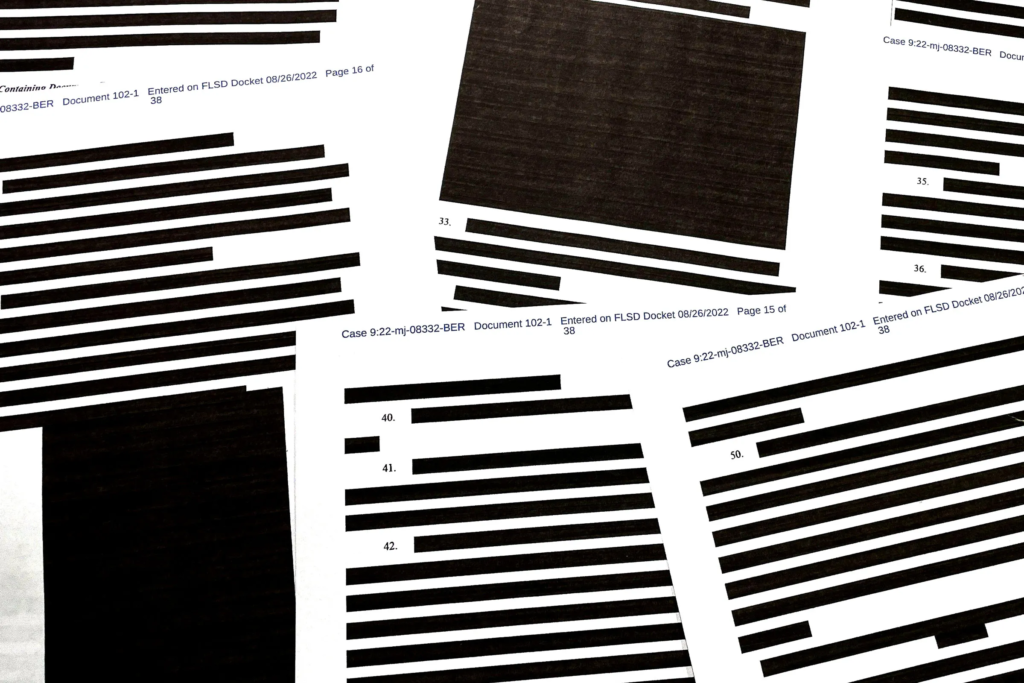
For what the public received was not the report in its entirety, but a summary. The detailed annexures—believed to contain intelligence inputs, operational linkages, and potentially identifiable networks—were withheld. They remain, to this day, outside the public domain.
The result is a peculiar form of partial transparency. Enough was revealed to confirm the existence of a structural issue. Not enough was disclosed to allow a full understanding of its depth or mechanics.
This incompleteness is not incidental. It is central to the report’s legacy.
Because once a state acknowledges the existence of a systemic flaw but withholds its full contours, the conversation shifts. The focus is no longer solely on the problem itself, but on the boundaries of what can be publicly known about it.
And it is within those boundaries that the real story of the Vohra Committee Report begins.
Secrecy, Stability, and the Politics of Withholding
If the first part of the Vohra Committee Report’s story is about recognition, the second is about restraint.
The decision to withhold the annexures was justified on grounds that are, at least formally, difficult to contest. Governments have consistently argued that full disclosure could compromise intelligence sources, reveal sensitive operational details, and potentially disrupt ongoing investigations. In a country with complex internal security challenges, such concerns cannot be dismissed lightly.
But the persistence of this secrecy for over three decades suggests that the issue extends beyond immediate operational risks.
Time, after all, alters the sensitivity of information. Networks evolve. Individuals move in and out of positions of influence. Contexts change. Yet the annexures have remained inaccessible, not just in the years immediately following the report, but across successive political regimes.
This continuity raises a more fundamental question: what exactly is being protected?
One possibility is that the annexures contain details that would not merely inform, but implicate. Unlike the summary, which speaks in generalities, the detailed sections are believed to map specific relationships—between individuals, institutions, and financial flows. To release such information would not just illuminate a system; it could trigger a chain of accountability that extends across political and bureaucratic lines.
And therein lies the difficulty.
In a political system where power transitions occur but institutional continuities remain, the exposure of past linkages can have present-day consequences. It can blur the distinction between historical and ongoing responsibility. It can complicate narratives that rely on clear separations between “then” and “now.”
In this sense, the secrecy surrounding the report is not merely about the past. It is about the present’s ability to manage the past.
There is also the question of systemic stability. Democracies depend not only on transparency, but on a baseline level of trust in institutions. A sudden, comprehensive disclosure of entrenched criminal-political linkages could have destabilizing effects, particularly if it reveals patterns that appear persistent rather than episodic.
This creates a tension that is not unique to India, but is particularly pronounced in this case. Transparency strengthens democratic accountability. Stability sustains institutional functioning. When the two come into conflict, states often err on the side of caution.
But caution, when prolonged, carries its own risks.
The partial disclosure of the Vohra Committee Report has allowed the issue of criminalisation of politics to remain in a state of perpetual acknowledgement without resolution. The existence of the problem is widely accepted. Its specifics remain elusive. This gap creates space for selective interpretation, periodic outrage, and incremental reform—but rarely for structural change.
In effect, the report has become both a reference point and a limitation. It is invoked to highlight the depth of the issue, yet its incompleteness prevents a full engagement with that depth.
This is perhaps why the report continues to resonate. Not because it provides answers, but because it defines the boundaries of the questions that can be asked.
Three decades on, India’s political landscape has changed in many ways. The economy has expanded. Institutions have evolved. New forms of transparency, from electoral disclosures to digital governance, have emerged. And yet, the core concern that the Vohra Committee identified—the intersection of money, muscle, and political power—remains part of the national conversation.
This continuity does not necessarily mean that nothing has changed. But it does suggest that the structural issues identified in 1993 were not fully resolved.
And that brings us back to the central paradox of the report.
It is one of the rare instances where the state formally acknowledged a systemic vulnerability within its own functioning. Yet, by withholding the most detailed evidence, it also ensured that this acknowledgment would remain incomplete.
The Vohra Committee Report is, therefore, not just a document about the nexus between crime and politics. It is also a document about the limits of disclosure in a democracy. It reveals how much can be said—and how much can remain unsaid—even when the stakes are national.
In the end, its enduring relevance lies not in the specifics it contains, but in the silence it preserves.
For in that silence is a question that continues to hover over India’s democratic experience: not whether the system has flaws, but how much of those flaws can be openly confronted without unsettling the very structures they inhabit.
And until that question is answered more fully, the report will remain what it has always been—a partial mirror, reflecting just enough to be recognized, but never enough to be completely understood.