
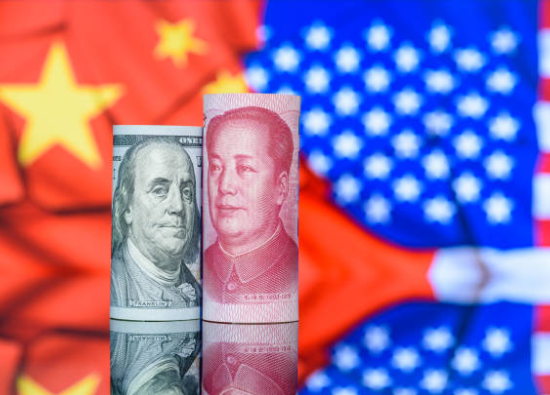
Is China Quietly Building a Financial System to Challenge the Dollar?
The System You Never See — But Live Inside
Most people think power is visible.
Armies. Elections. Leaders shaking hands.
But the real architecture of global power is invisible —
it moves silently through payment systems, reserve currencies, and trust networks.
At the center of that invisible system sits the SWIFT network, and more importantly, the dominance of the US dollar.
For over half a century, this system has done something extraordinary:
It has allowed one country — the United States — to consume more than it produces,
borrow at scale,
and still remain the anchor of global stability.
This wasn’t an accident.
It was engineered.
And now, quietly, it may be changing.
The Moment the Rules Changed
In 1971, a decision was made that should have destabilized everything.
The Nixon Shock
The United States ended the convertibility of the dollar into gold.
Until that moment, the dollar had a physical anchor.
After it, it became something else entirely:
A promise backed by trust, power, and global demand.
By conventional logic, this should have weakened the dollar.
Instead, it became stronger than ever.
The Invisible Deal That Sustained the Dollar
What replaced gold wasn’t another metal.
It was something far more strategic:
The Petrodollar System
Oil — the most critical commodity in the world — began to be priced in dollars.
This created a feedback loop:
- Countries needed oil
- Oil required dollars
- Demand for dollars became global and constant
It didn’t matter whether you were India, Japan, or Germany.
If you wanted energy, you needed dollars.
And if you needed dollars, you participated — willingly or not — in the American financial system.
The Privilege No Empire Ever Had
This system gave the United States something unprecedented.
Economists call it an “exorbitant privilege,” but that phrase undersells it.
It meant:
- The US could run persistent trade deficits
- It could print money without immediate collapse
- It could borrow at lower interest rates than others
- It could enforce sanctions with devastating reach
In effect, the US didn’t just participate in the global economy.
It defined the terms of participation.
The System’s Hidden Vulnerability
But every system built on trust carries a risk:
👉 What happens when participants begin to look for alternatives?
Not necessarily because they want to replace the system…
…but because they want insurance against it.
That question began to matter more after a series of events:
- Financial sanctions on countries like Russia
- Increasing weaponization of financial access
- Rising geopolitical fragmentation
For many countries, the realization was simple:
If access to the system can be restricted,
dependence on it becomes a vulnerability.
China’s Approach: Don’t Attack — Build
China did not respond with confrontation.
It responded with construction.
Over the past decade, it has been assembling something far more subtle than a rival system:
A parallel architecture.
At the center of that architecture lies:
The Cross-Border Interbank Payment System
Launched in 2015, CIPS is designed to do something deceptively simple:
Enable cross-border transactions in Chinese yuan.
But its significance lies not in what it does —
but in what it represents.
More Than a Payment System
CIPS is not just a technical platform.
It is a strategic instrument.
Unlike SWIFT, which primarily facilitates messaging between banks,
CIPS integrates both communication and settlement.
This matters.
Because it reduces the need to rely on Western-controlled infrastructure
at the most critical point of financial interaction.
And while its scale is still far smaller than SWIFT,
its growth is steady, deliberate, and aligned with a broader vision.
Building the Ecosystem
CIPS does not exist in isolation.
It is part of a layered strategy:
- Trade agreements denominated in yuan
- Currency swap lines with partner countries
- Expansion of financial ties under the Belt and Road Initiative
- Development of a central bank digital currency (e-CNY)
Each element reinforces the others.
Individually, they are incremental.
Together, they form something more significant:
👉 A system that reduces dependence on the dollar without directly confronting it.
The Reality Check Most Analyses Miss
At this point, it’s tempting to declare a shift in global dominance.
That would be premature.
The dollar still accounts for the majority of global reserves.
SWIFT still connects thousands of financial institutions worldwide.
Trust in US financial markets remains unmatched.
CIPS is not replacing SWIFT.
Not yet.
And possibly not ever — at least not in the way many assume.
The Real Shift Isn’t Replacement
The real shift is more subtle — and more important.
It is not about one system replacing another.
It is about the emergence of options.
For decades, the global financial system was effectively singular.
Now, it is becoming plural.
And once alternatives exist, behavior begins to change.
Not dramatically at first.
But gradually.
Quietly.
Structurally.
What Happens When Demand for Dollars Slows?
This is where the implications become profound.
The dollar’s dominance is not just a financial detail.
It is the foundation of the United States’ economic model.
If global demand for dollars begins to decline — even marginally —
the effects could ripple outward.
Borrowing costs could rise.
Inflation dynamics could shift.
Trade imbalances could become harder to sustain.
None of this would happen overnight.
But systems do not need to collapse to weaken.
They only need to lose their inevitability.
The Question That Changes Everything
Which brings us to the real question — the one that defines the next decade:
What happens when the world no longer depends on a single financial system?
Not rejects it.
Not replaces it.
Simply…
no longer depends on it exclusively.
A Shift Without a Headline
There is no dramatic moment announcing this transition.
No treaty.
No declaration.
No collapse.
Instead, there are signals:
- A payment settled outside traditional channels
- A trade agreement denominated in a different currency
- A system like CIPS growing quietly in the background
Individually, these are minor.
Collectively, they are transformative.
Where This Is Heading
This is not the end of dollar dominance.
It is the beginning of something more complex:
A world where financial power is distributed, negotiated, and contested.
Where systems overlap.
Where dependencies are optional.
Where influence must be maintained — not assumed.
The Calm Before the Real Question
We studied about the structure,
Now it is about stress.
Because systems are not truly tested in normal conditions.
They are tested at chokepoints.
And there is no chokepoint more critical than this:
The Strait of Hormuz
Further we delve into:
- Can oil trade move away from the dollar?
- What happens if access to energy routes depends on currency?
- Is the “petroyuan” a real shift or an overhyped signal?
- And does financial power quietly shape geopolitical conflict?
The system isn’t breaking.
It’s branching.
Hormuz, the Petroyuan, and the Slow Fracturing of Dollar Power
The Place Where Systems Get Tested
Earlier it was about systems, this is about stress testing them.
Because no global order reveals its true nature in stability.
It reveals itself at chokepoints.
And there is no chokepoint more consequential than the
Strait of Hormuz.
A narrow stretch of water — barely 33 km wide at its tightest —
through which nearly one-fifth of the world’s oil supply flows.
For decades, it has been a vulnerability.
In 2026, it became something else:
👉 A lever.
When Geography Becomes Power
What is happening in Hormuz today is not just a military crisis.
It is a financial event disguised as a geopolitical one.
Iran has not simply threatened to close the strait.
It has done something far more strategic:
- Allowed select countries to pass
- Restricted others
- Negotiated access case by case
In effect, it has transformed a global trade route into something resembling a controlled gateway.
Some countries — including China, India, and others — have been granted passage under specific conditions. (Wikipedia)
Others face uncertainty, delays, or outright denial.
And in that selective access lies a deeper shift.
The Emergence of a “Toll Booth World”
Reports suggest something unprecedented:
👉 Iran has begun charging or negotiating oil flows in yuan-linked arrangements
This is not yet universal.
It is not formal policy across all shipments.
But it is enough to signal intent.
Enough to raise a question that would have sounded absurd a decade ago:
What if access to oil is no longer just about supply — but about currency?
Oil, Currency, and the First Crack in the System
For over 50 years, the global energy system has been tied to the dollar.
Oil was priced in USD.
Energy flows reinforced dollar demand.
Dollar demand reinforced US dominance.
But Hormuz introduces a disruption to that loop.
Because now, for the first time:
- Oil flow is being selectively controlled
- Currency preferences are entering negotiations
- Access itself is becoming conditional
And when access becomes conditional…
👉 Power shifts from system to gatekeeper
A Crisis That Is Already Reshaping the World
The consequences are no longer theoretical.
They are unfolding in real time:
- Oil prices have surged past $100 amid disruptions (Wikipedia)
- Up to 20% of global oil and LNG flows have been affected (Reuters)
- Tanker traffic has collapsed dramatically, with ships stranded or rerouted (India Today)
- A prolonged disruption could remove 13–14 million barrels/day from supply (Reuters)
This is not just a regional shock.
It is a systemic one.
One that touches:
- Energy prices
- Food supply chains
- Inflation
- Global trade
The Petroyuan Question Is No Longer Theoretical
This is where your flagship argument sharpens.
For years, analysts speculated about a “petroyuan.”
A system where oil is traded in Chinese yuan instead of US dollars.
Until now, it remained mostly conceptual.
Hormuz changes that.
Because it introduces a real-world mechanism:
👉 Control of flow + currency preference = leverage
If even a small percentage of oil trade shifts away from the dollar:
- Demand for USD weakens at the margin
- Parallel pricing systems emerge
- Financial fragmentation accelerates
Not collapse.
But erosion.
The Question Everyone Is Thinking — But Not Saying Clearly
Let’s frame it the right way:
Is this about war — or about control over the system?
The current conflict is undeniably about:
- Security
- Alliances
- Regional dominance
But beneath that lies a deeper layer:
👉 Control over energy flows and financial systems
Because in the modern world, those two are inseparable.
A Hard Truth About Power
The United States does not just maintain military alliances.
It maintains a system:
- Dollar dominance
- Financial rails like SWIFT
- Influence over global liquidity
And that system depends on one critical assumption:
👉 That the world continues to need it
Hormuz is one of the first places where that assumption is being tested.
The War Angle — Without the Noise
Let’s be precise.
There is no credible evidence that wars are fought only to protect the dollar.
But it would be equally naïve to assume:
👉 That financial dominance plays no role in strategic thinking
When:
- Energy routes are disrupted
- Currency alternatives emerge
- Financial influence is challenged
These factors inevitably shape decisions.
Not as the sole cause.
But as part of the equation.
The Real Shift: From Control to Negotiation
What we are witnessing is not the collapse of US dominance.
It is something more subtle:
👉 The transition from control → negotiation
- Countries negotiating passage
- Negotiating currency
- Negotiating alignment
The system is no longer automatic.
It is becoming transactional.
India: The Country Caught in the Middle — and Adapting Fast
No country illustrates this shift better than India.
India depends heavily on imported energy.
And much of that energy flows through Hormuz.
When the crisis hit:
- Supply routes were disrupted
- Costs surged
- Uncertainty increased
India responded pragmatically:
👉 It began rapidly increasing oil imports from Russia
👉 These imports could reach ~40% of total supply (The Times of India)
At the same time:
- Indian naval forces escorted ships
- Diplomatic channels secured passage
- Supply chains diversified
India is not choosing sides.
It is doing something more important:
👉 Adapting to a multipolar system
India’s Strategic Position in the New Order
India sits at a unique intersection:
- Strong ties with the US
- Deep energy links with Russia
- Growing trade with China
- Exposure to Gulf stability
In a fragmented world, this becomes an advantage.
Because flexibility becomes more valuable than alignment.
The World That Is Emerging
This is no longer a hypothetical future.
It is already visible:
- Multiple payment systems
- Multiple currency zones
- Multiple power centers
The world is not de-globalizing.
It is re-globalizing differently.
The Final Question That Defines the Decade
We return to the central question — now sharper, more urgent:
What happens when energy, currency, and power stop flowing through a single system?
Not collapse.
Not replacement.
But fragmentation.
The dollar system is not ending.
But for the first time in modern history,
it is no longer the only system that matters.
And once the world learns it has options…
it never fully goes back.
Part of the “Geopolitics Made Simple: The Complete Masterclass for India and the World” series.
The Shadow Fleet: The Secret System Powering the Sanctioned World
&
Is the War on Iran About Nuclear Threats—or About China’s Control Over Shadow Oil Flows?